
what is SEO
What Is SEO? A Beginner’s Guide to Getting Found on Google
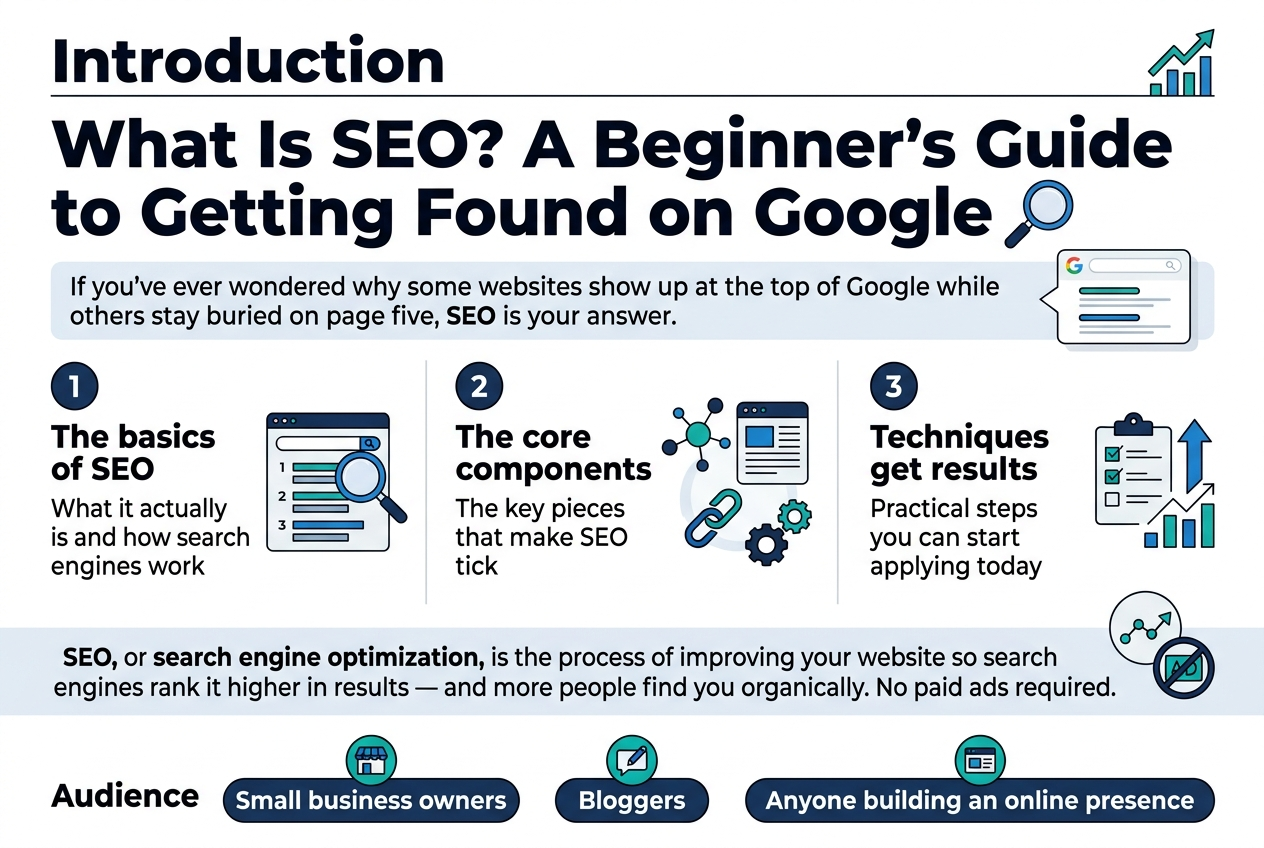
If you’ve ever wondered why some websites show up at the top of Google while others stay buried on page five, SEO is your answer.
SEO, or search engine optimization, is the process of improving your website so search engines rank it higher in results — and more people find you organically. No paid ads required.
This guide is for small business owners, bloggers, and anyone building an online presence who wants real, lasting traffic without burning through an ad budget.
Here’s what we’ll cover:
-
The basics of SEO — what it actually is and how search engines work
-
The core components — the key pieces that make SEO tick
-
Techniques that get results — practical steps you can start applying today
By the end, you’ll have a solid foundation to start making smarter decisions for your site.
Understanding the Basics of SEO
What SEO Stands For and Why It Matters
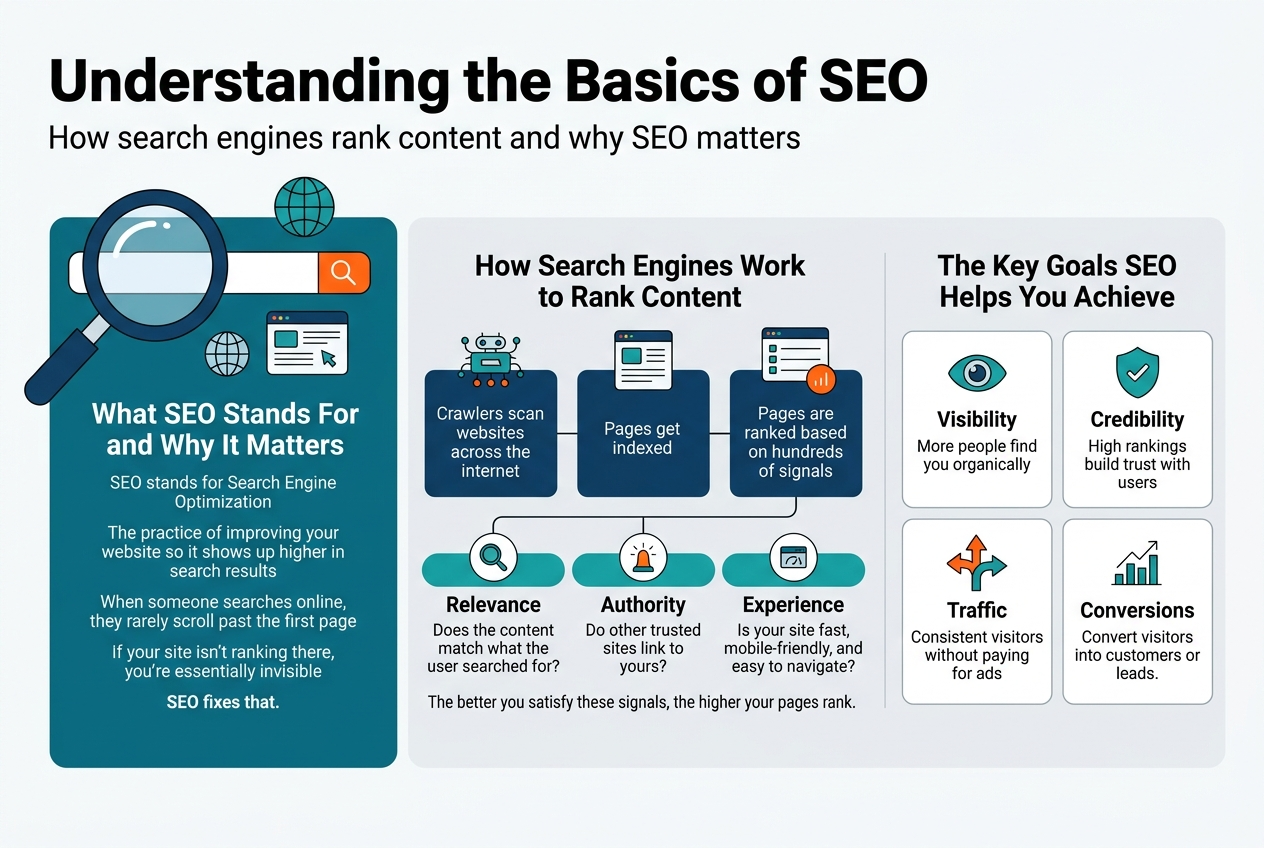
SEO stands for Search Engine Optimization — the practice of improving your website so it shows up higher in search results on Google, Bing, or any other search engine.
When someone searches for something online, they rarely scroll past the first page. If your site isn’t ranking there, you’re essentially invisible. SEO fixes that.
How Search Engines Work to Rank Content
Search engines use automated programs called crawlers to scan websites across the internet. Once crawled, pages get indexed and ranked based on hundreds of signals:
-
Relevance — Does the content match what the user searched for?
-
Authority — Do other trusted sites link to yours?
-
Experience — Is your site fast, mobile-friendly, and easy to navigate?
The better you satisfy these signals, the higher your pages rank.
The Key Goals SEO Helps You Achieve
SEO isn’t just about traffic — it’s about the right traffic. Here’s what good SEO actually delivers:
| Goal | What It Means |
|---|---|
| Visibility | More people find you organically |
| Credibility | High rankings build trust with users |
| Traffic | Consistent visitors without paying for ads |
| Conversions | Relevant visitors who actually take action |
Core Components That Drive SEO Success
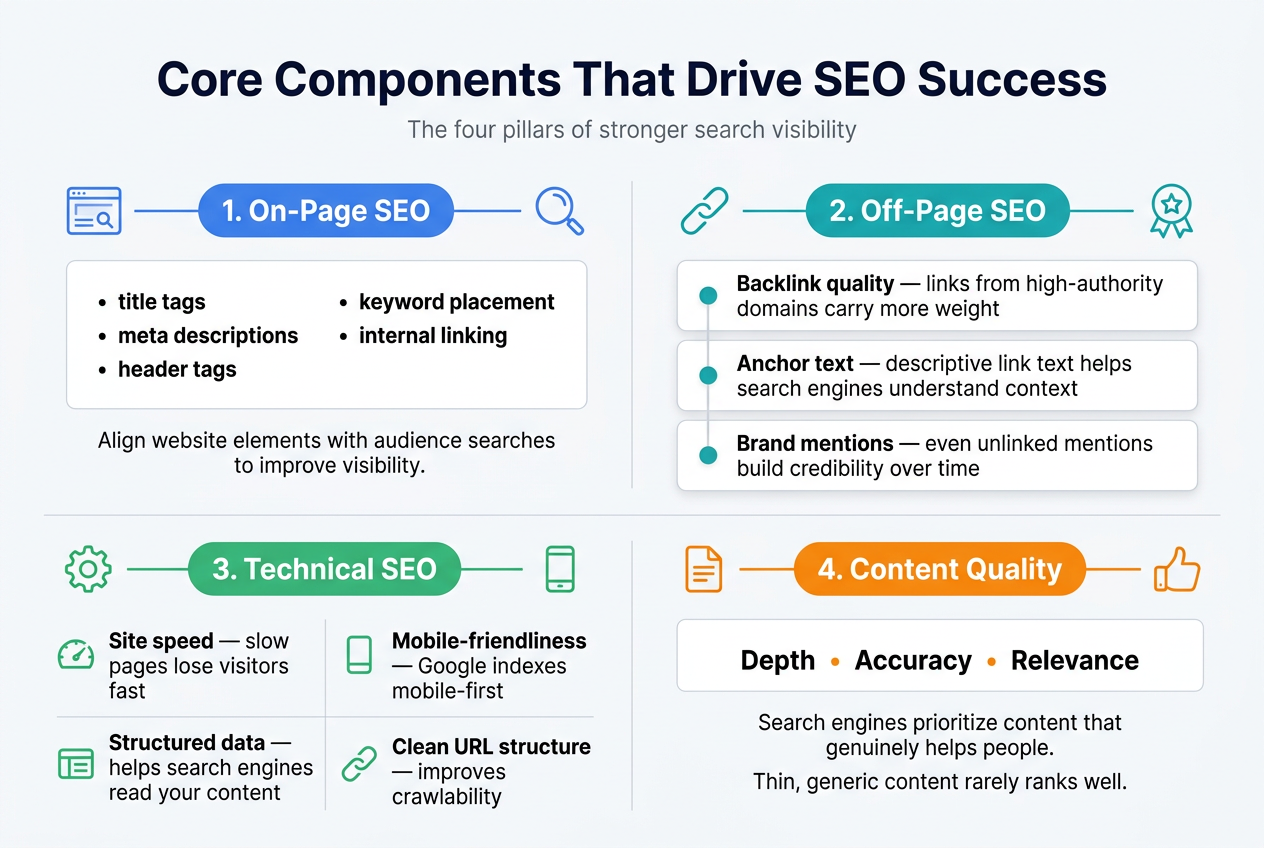
On-page SEO covers everything you control directly on your website — title tags, meta descriptions, header tags, keyword placement, and internal linking. When these elements are aligned with what your audience searches for, search engines can easily understand your content and rank it higher.
Off-Page SEO and the Power of Backlinks
Backlinks are votes of confidence from other websites. When reputable sites link to yours, search engines treat your content as trustworthy and authoritative. Key off-page signals include:
-
Backlink quality – links from high-authority domains carry more weight
-
Anchor text – descriptive link text helps search engines understand context
-
Brand mentions – even unlinked mentions build credibility over time
Technical SEO and Its Role in Site Performance
Technical SEO ensures search engines can crawl and index your site without hitting roadblocks. Core areas include:
| Factor | Why It Matters |
|---|---|
| Site speed | Slow pages lose visitors fast |
| Mobile-friendliness | Google indexes mobile-first |
| Structured data | Helps search engines read your content |
| Clean URL structure | Improves crawlability |
Content Quality and Its Impact on Rankings
Search engines prioritize content that genuinely helps people. Thin, generic content rarely ranks. Depth, accuracy, and relevance keep readers engaged — and that engagement signals to Google that your page deserves visibility.
Essential SEO Techniques Every Website Needs
Keyword Research and Targeting the Right Audience
Getting your keywords right is everything. You want to find terms your actual audience types into Google — not just what sounds good to you.
-
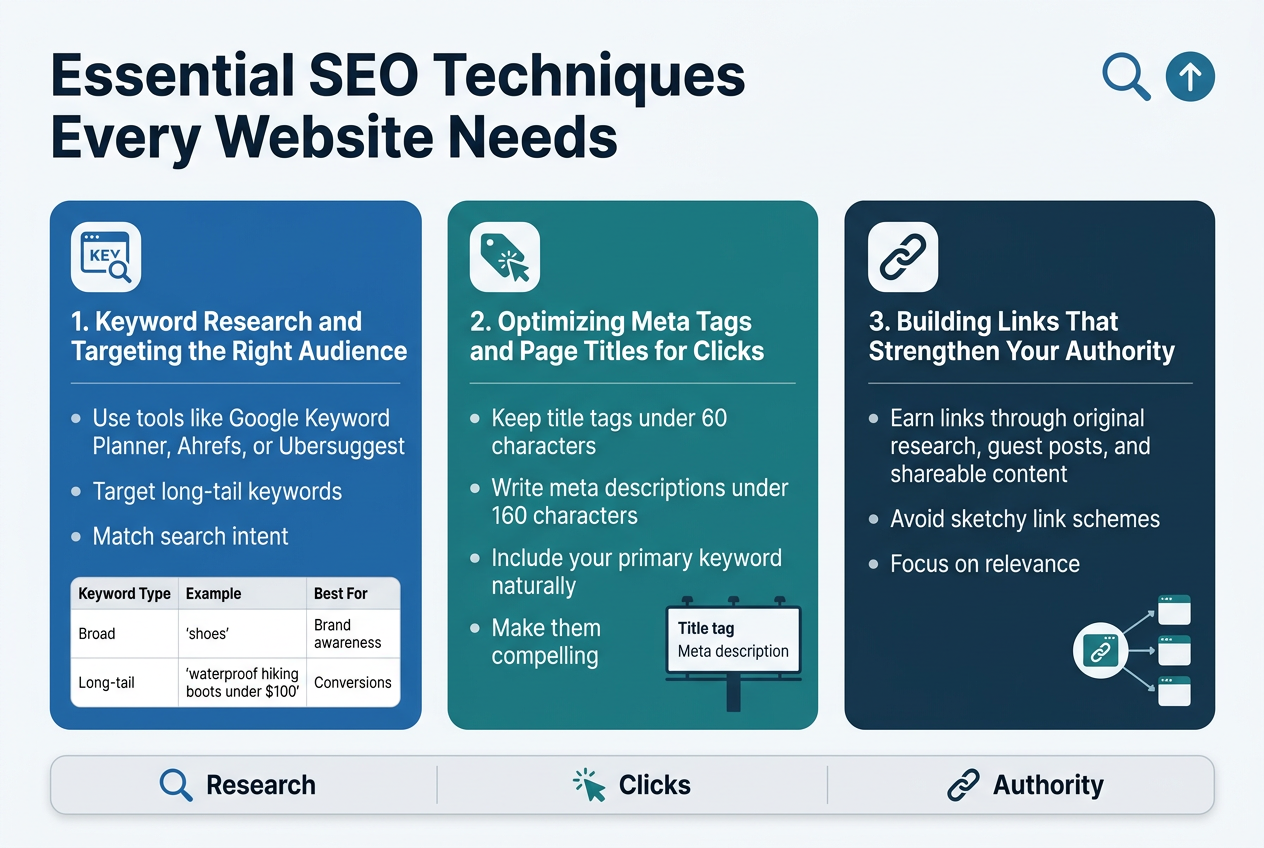
Use tools like Google Keyword Planner, Ahrefs, or Ubersuggest
-
Target long-tail keywords (e.g., “best running shoes for flat feet”) — less competition, higher intent
-
Match search intent — informational, navigational, or transactional
| Keyword Type | Example | Best For |
|---|---|---|
| Broad | “shoes” | Brand awareness |
| Long-tail | “waterproof hiking boots under $100” | Conversions |
Optimizing Meta Tags and Page Titles for Clicks
Your title tag and meta description are your billboard on Google. They don’t just affect rankings — they drive clicks.
-
Keep title tags under 60 characters
-
Write meta descriptions under 160 characters that tease value
-
Include your primary keyword naturally in both
-
Make them compelling — think of them as mini-ads
Building Links That Strengthen Your Authority
Backlinks are votes of confidence from other websites. Quality beats quantity every time.
-
Earn links through original research, guest posts, and shareable content
-
Avoid sketchy link schemes — Google penalizes them hard
-
Focus on relevance — a link from an industry site beats a random directory every time
How SEO Delivers Long-Term Business Value
Driving Consistent Organic Traffic Without Paid Ads
A well-optimized site keeps pulling in visitors around the clock — no ad budget required. Unlike paid campaigns that stop the moment you cut spending, organic rankings keep delivering traffic month after month.
Building Brand Credibility Through Higher Rankings
People trust Google. When your site consistently appears at the top, users naturally assume you’re a credible, authoritative source. That perception builds brand equity you simply can’t buy with ads.
Generating More Leads and Conversions Over Time
SEO attracts people already searching for what you offer. That intent-driven traffic converts better than cold audiences. Over time, your pipeline grows without proportionally increasing your marketing spend.
| Traffic Source | Cost Over Time | Conversion Intent |
|---|---|---|
| SEO (Organic) | Decreases | High |
| Paid Ads | Increases | Medium |
| Social Media | Variable | Low–Medium |
Gaining a Competitive Edge in Your Industry
-
Ranking above competitors means capturing their potential customers
-
Strong domain authority becomes harder for rivals to overtake quickly
-
Early SEO investment creates a compounding advantage that widens your lead over time
The businesses investing in SEO today are the ones dominating search results tomorrow.
Common SEO Mistakes That Hold Your Site Back
Ignoring Mobile Optimization and Page Speed
Google ranks mobile-first, meaning your desktop experience is almost irrelevant if your mobile site is clunky or slow. A page that takes more than three seconds to load loses nearly half its visitors before they even read a word.
-
Compress images before uploading
-
Use a content delivery network (CDN)
-
Eliminate unnecessary plugins and scripts
Keyword Stuffing and Why It Hurts Rankings
Cramming keywords into every sentence used to work in 2005. Now it actively tanks your rankings. Google’s algorithms are smart enough to detect unnatural repetition and will penalize pages that read like a robot wrote them.
Write for humans first. Use keyword variations and related terms naturally throughout your content instead.
Neglecting Regular Content Updates and Fresh Material
Search engines favor websites that stay active. A blog post from 2018 with outdated statistics signals to Google that your site may no longer be reliable or relevant.
| Action | Impact |
|---|---|
| Update old posts with new data | Boosts existing rankings |
| Add new content regularly | Signals site activity |
| Remove outdated pages | Improves overall quality score |
Even refreshing a few key pages every quarter keeps your site competitive without requiring constant new content creation.
Getting Started With SEO the Right Way
Setting Clear and Measurable SEO Goals
Skip vague goals like “rank better.” Instead, aim for specifics:
-
Increase organic traffic by 30% in 6 months
-
Rank on page one for 5 target keywords
-
Reduce bounce rate below 50%
Measurable goals keep your efforts focused and show real progress over time.
Choosing the Right SEO Tools to Track Progress
You don’t need to spend a fortune. Start with these:
| Tool | Best For | Cost |
|---|---|---|
| Google Search Console | Tracking rankings & clicks | Free |
| Google Analytics | Understanding user behavior | Free |
| Ahrefs / SEMrush | Keyword & competitor research | Paid |
| Yoast SEO | On-page optimization (WordPress) | Free/Paid |
Building a Sustainable SEO Strategy Step by Step
-
Month 1–2: Fix technical issues, research keywords, optimize existing pages
-
Month 3–4: Create fresh content targeting priority keywords
-
Month 5–6: Build backlinks and track what’s working
Consistency beats shortcuts every time.
Knowing When to Hire an SEO Expert for Better Results
Bring in a professional when:
-
You’ve tried the basics but rankings stay flat
-
You’re in a competitive niche
-
You simply don’t have time to do it right
A good SEO expert pays for themselves through compounding organic growth.
SEO is one of those things that seems complex at first but really comes down to a few core principles — creating valuable content, making your site easy to navigate, building credibility through quality links, and giving search engines the signals they need to understand what your pages are about. Avoiding common pitfalls like keyword stuffing, neglecting mobile users, or skipping technical basics can make a huge difference in how your site performs over time. The businesses that win with SEO are the ones that treat it as an ongoing effort rather than a one-time fix.
If you’re just getting started, don’t let the learning curve intimidate you. Pick one area, get comfortable with it, and build from there. Small, consistent improvements stack up fast, and the long-term payoff — more traffic, better visibility, and real business growth — is absolutely worth the effort. Start today, stay consistent, and watch your site climb.